David Patterson · 2 September 2026
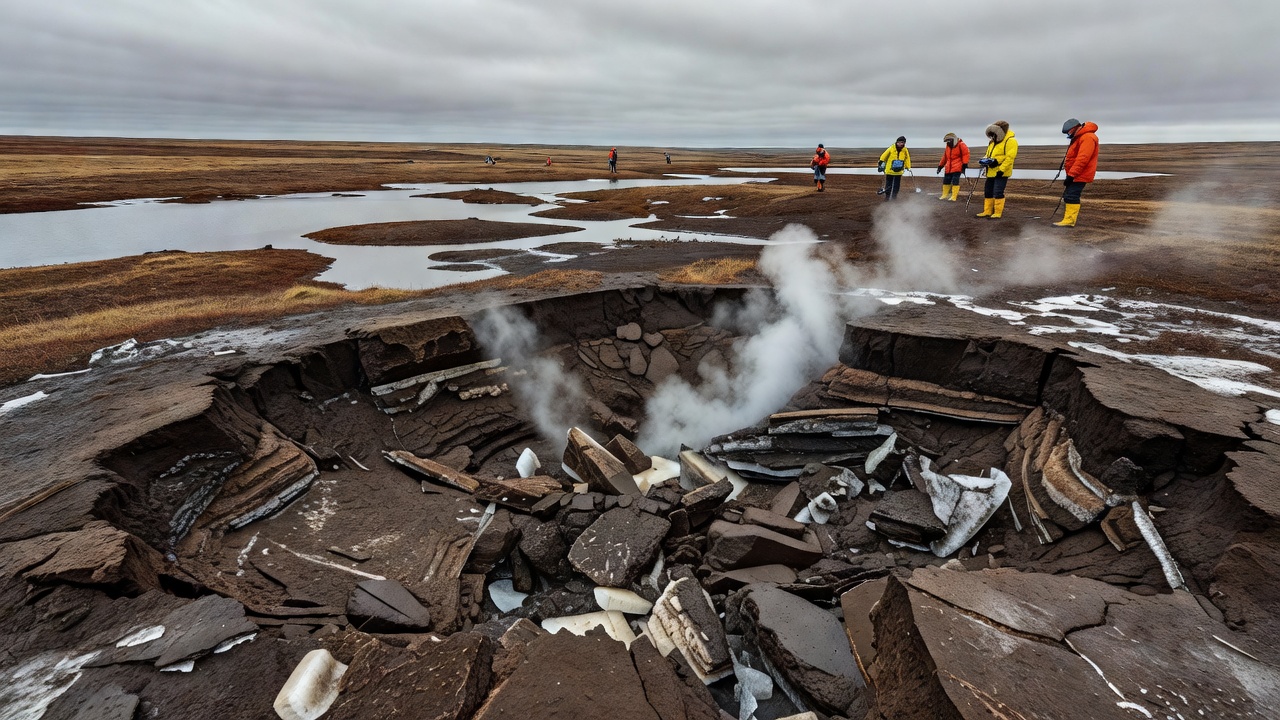
Recent observations from Arctic monitoring stations indicate that thawing permafrost is releasing methane at rates significantly higher than previous estimates. This potent greenhouse gas, with a global warming potential over 25 times that of carbon dioxide over a century, poses challenges for climate models. Scientists at polar research institutions have documented accelerated thaw across Siberian and Alaskan tundra regions, linking it directly to rising temperatures.
Mechanisms Driving Methane Release
Permafrost, ground that remains frozen for at least two consecutive years, stores vast amounts of organic carbon. As temperatures rise, microbial activity in thawing soils converts this carbon into methane. Field studies show that thermokarst lakes and wetlands formed by subsidence amplify emissions, creating feedback loops. Data from continuous sensors reveal seasonal peaks during summer months when thaw depths exceed two meters in vulnerable areas. Researchers emphasize that abrupt thaw events, rather than gradual warming, contribute disproportionately to annual totals.
Measurements from eddy covariance towers and chamber experiments confirm methane fluxes up to three times baseline levels in disturbed sites. These findings align with satellite observations of atmospheric methane concentrations over the Arctic. The process also releases carbon dioxide, though methane dominates short-term radiative forcing.
Broader Implications for Climate and Ecosystems
Accelerated emissions threaten to undermine global mitigation efforts, potentially adding 0.2 to 0.4 degrees Celsius to warming projections by 2100. Arctic ecosystems face shifts as vegetation changes and wildlife habitats degrade. Indigenous communities report altered hunting patterns due to unstable ground and altered hydrology. International collaborations are expanding permafrost observatories to improve predictive models and inform policy. Continued monitoring remains essential to quantify feedbacks and support adaptation strategies in polar regions.