Logan Schmitt · 2 September 2026
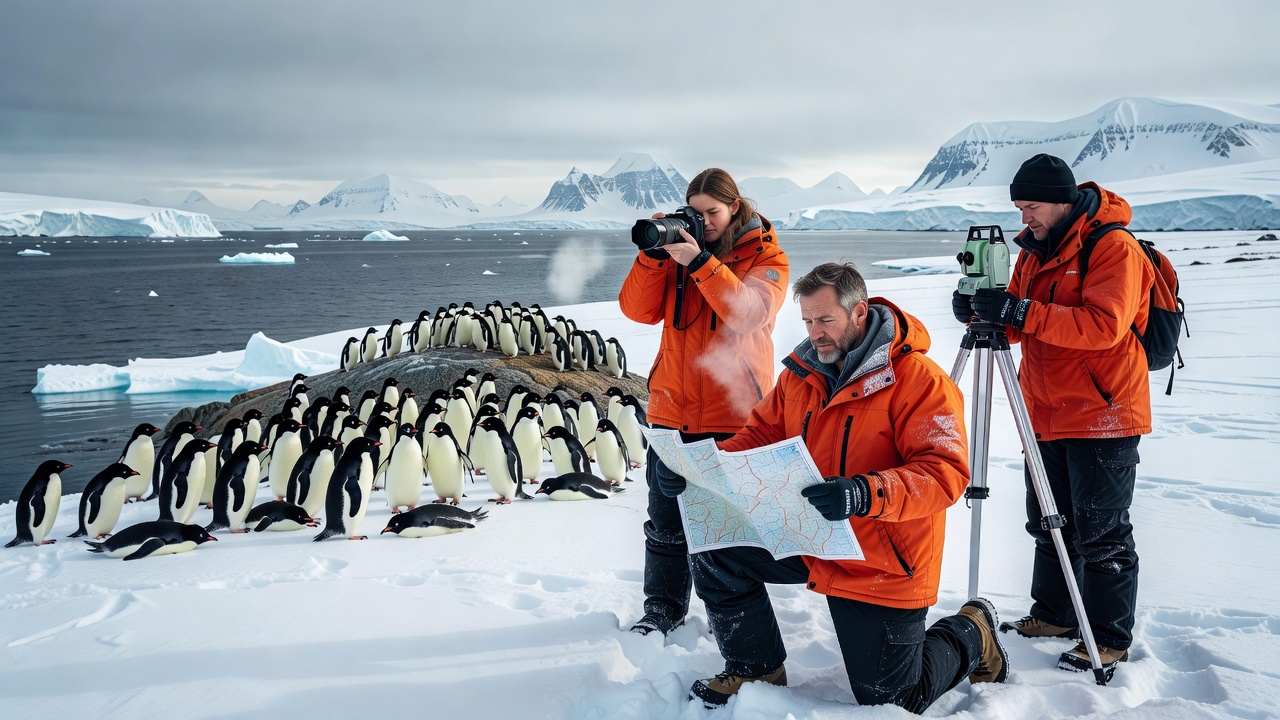
A Polish research expedition has identified several previously undocumented penguin colonies along the Antarctic Peninsula. The team from the Institute of Biochemistry and Biophysics combined high-resolution satellite imagery with on-site verification to locate breeding sites of Adélie and gentoo penguins. Findings indicate at least four new colonies supporting an estimated 12,000 breeding pairs.
Survey Methods and Data Collection
Researchers employed multispectral satellite data from the European Space Agency’s Sentinel-2 mission to detect guano stains on ice-free coastal areas. Ground teams then used drones equipped with thermal cameras to confirm penguin presence and count individuals without disturbance. The methodology allowed coverage of 180 kilometers of coastline in three weeks. All data underwent peer review before submission to the Scientific Committee on Antarctic Research database. Weather conditions during the austral summer provided clear visibility windows essential for accurate imagery.
Team members calibrated drone flights to avoid nesting areas, maintaining a minimum altitude of 80 meters. GPS coordinates were cross-referenced with historical records from the 1990s to verify novelty of the sites. Population estimates include margins of error derived from repeated counts across multiple days. The project received funding from Poland’s National Science Centre under its polar research grant program.
Conservation and Climate Implications
Discovery of new colonies offers fresh data on species distribution amid rapid regional warming. Some sites lie farther south than previously recorded breeding ranges, suggesting possible adaptation to changing sea-ice patterns. Continued monitoring will track colony stability and chick survival rates over the next five seasons. Results contribute to international efforts assessing penguin population trends under the Commission for the Conservation of Antarctic Marine Living Resources.
Polish scientists plan to share open-access maps with partner institutions in Chile and Norway. The data may inform marine protected area proposals currently under discussion at Antarctic Treaty consultative meetings. Long-term records from these colonies will help distinguish natural variability from climate-driven shifts in the Southern Ocean ecosystem.